
ORLANDO, Fla. — As tax season continues, Visa is warning consumers to stay alert as scammers become more sophisticated, using artificial intelligence and stolen personal information to target tax refunds and identities.
According to Visa, dark web chatter connected to tax scams increased 62% in February compared with January, a sign that fraud activity is ramping up as criminals look for new ways to exploit taxpayers.
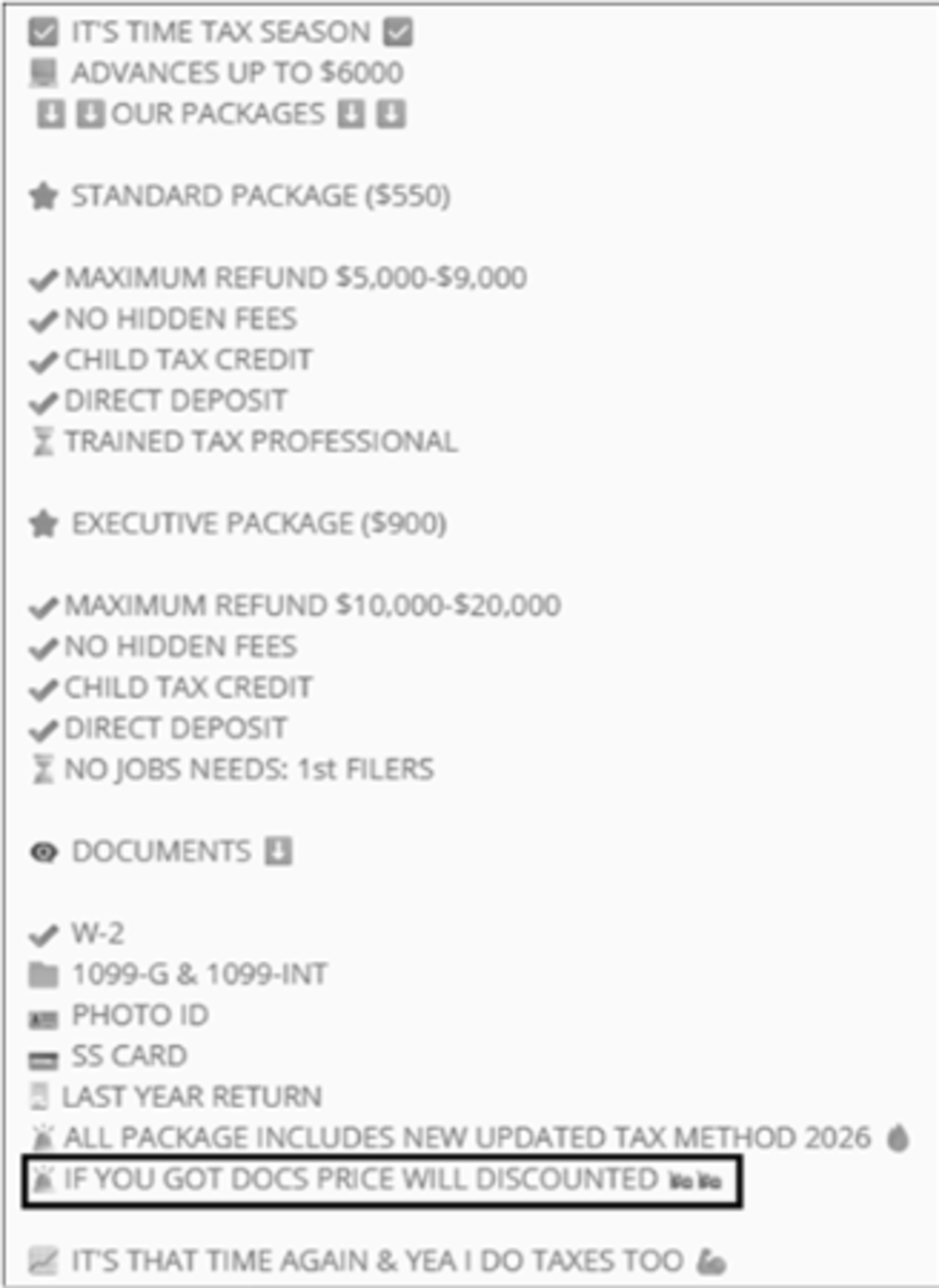
One growing tactic involves scammers posing as tax professionals and offering to file returns on behalf of consumers.
Visa said those schemes can be especially damaging because criminals use stolen personal information to submit fraudulent tax returns and claim refunds before legitimate taxpayers file.
“One of the most damaging trends this tax season involves fraudsters offering to file tax returns on behalf of consumers by posing as a professional,” Jonathan Polk, Visa’s head of risk for North America, said in a statement.
Polk said fraud operations have become more organized, with criminals increasingly relying on ready-made fraud tools sold through underground online forums.
“Visa’s threat intelligence teams are seeing fraudsters professionalize their operations in ways that change the tax scam landscape,” Polk said. “Instead of one-off schemes, criminals are increasingly relying on readymade starter packs for tax fraud sold in underground forums.”
Visa also said scammers are using artificial intelligence to make tax scams more convincing and easier to scale.
The company warned that AI-powered phishing kits can automate everything from realistic messages to early conversations with victims through chatbots.
“Scammers are also turning to AI-enabled phishing kits to streamline their operations,” Polk said. “These kits automate everything from crafting realistic messages to handling early conversations with victims through bots.”
Visa recommends consumers take extra caution when receiving tax-related messages or offers, especially during filing season.
To reduce risk, consumers should:
- Be skeptical of unsolicited messages claiming to be from the IRS
- Avoid anyone offering to file taxes or speed up a refund unexpectedly
- Avoid clicking links or scanning QR codes in unexpected tax-related messages
- Verify tax information directly through official IRS channels
The IRS does not initiate contact through email, text messages or QR codes.
Visa said the safest approach is to slow down, verify any request independently and avoid sharing sensitive personal information unless consumers are certain they are dealing with a legitimate source.
Click here to download our free news, weather and smart TV apps. And click here to stream Channel 9 Eyewitness News live.

©2026 Cox Media Group


