
ORLANDO, Fla. — For most of the last century, precision manufacturing depended heavily on human expertise. A part held its tolerance because an experienced machinist understood the feel of the cut, recognized the sound of a worn tool and made small adjustments that kept production within specification.
That model is facing growing pressure. The U.S. manufacturing skills gap could leave 2.1 million jobs unfilled by 2030, according to industry estimates, as experienced workers retire faster than new talent enters the workforce. At the same time, manufacturers are being asked to produce increasingly complex components with tighter tolerances and greater consistency.
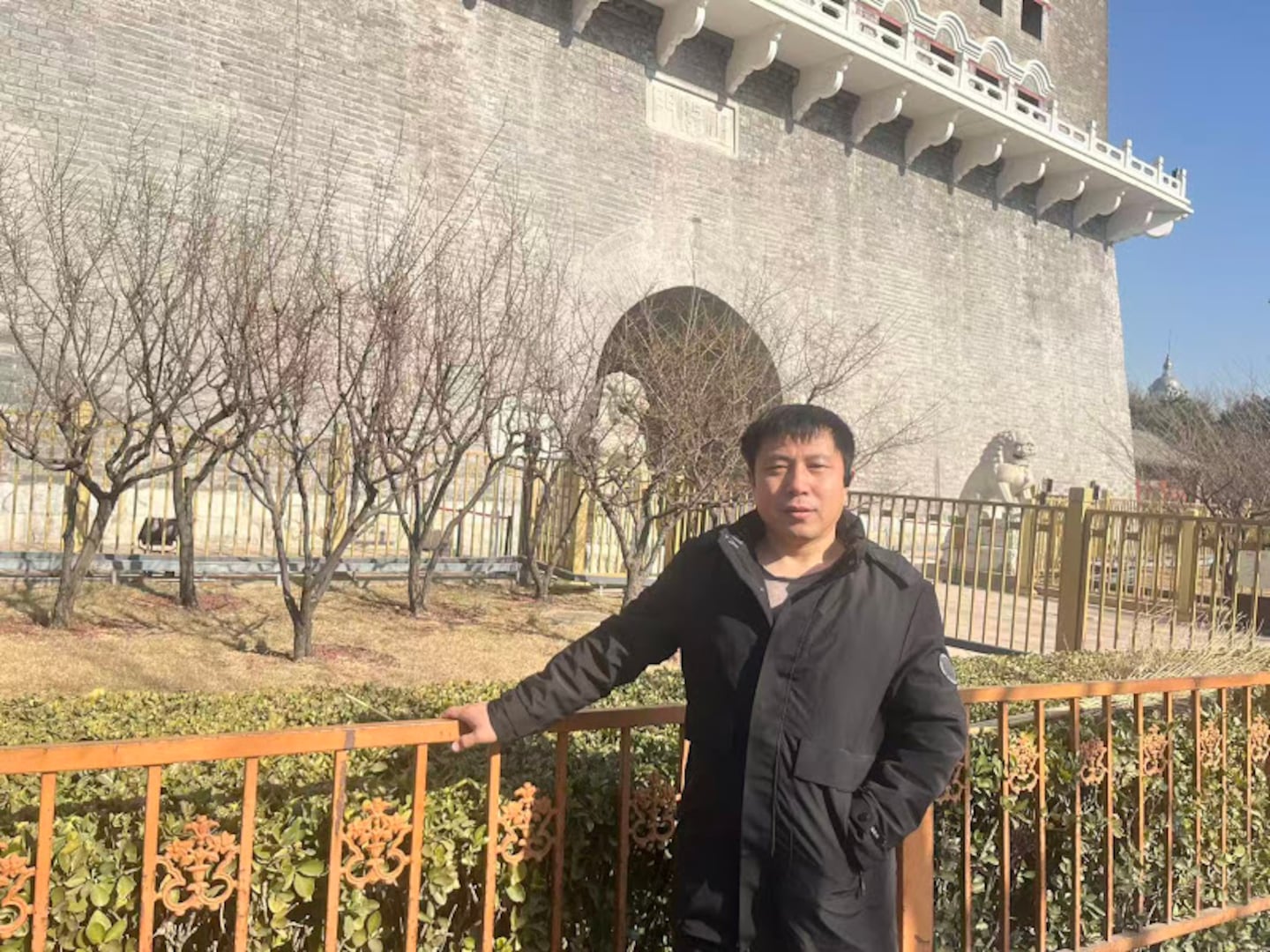
Among those working at the intersection of manufacturing, automation and engineering is Aaron Bin Wang, a chief technology officer at a U.S. precision machining company and a senior member of IEEE. Over the past two decades, Wang has worked on mechanical design, structural analysis and automation projects in both the United States and China, focusing on improving manufacturing consistency through process design and automation.
The limits of traditional manufacturing
The labor challenge is becoming increasingly difficult for manufacturers to ignore.
“The old way put all the precision in the operator’s hands,” Wang said. “That does not scale, and it does not survive a retirement. The precision has to live in the system, not in one person’s experience.”
Automation moves to the center of production
Automation has become a growing part of modern manufacturing operations. The number of industrial robots installed each year has more than doubled over the past decade, surpassing 500,000 units annually for multiple consecutive years.
Wang has worked on automation initiatives designed to move manual processes into integrated manufacturing cells, where loading, machining and inspection functions can operate with minimal operator intervention.
“A robot does not make a part more accurate by itself,” Wang said. “It makes the process repeatable. Accuracy still comes from the design of the cell, the fixturing and the way you measure. Automation just removes the human variation on top of that.”
Manufacturing becomes a data problem
Artificial intelligence is beginning to play a larger role in manufacturing environments as companies seek ways to optimize production, reduce downtime and improve quality control.
A member of the IEEE Robotics and Automation Society, Wang’s work focuses on combining machine-generated data with engineering processes to improve production outcomes. Rather than treating manufacturing as a fixed process, many organizations are increasingly using operational data to identify inefficiencies and improve consistency.
“Every machine on the floor is generating data,” Wang said. “For decades we threw most of it away. The opportunity now is to use it, to let the process tell you what it needs before a part goes out of spec.”
Building quality into the process
Quality control is also evolving as manufacturers incorporate automation and data analytics into inspection workflows.
AI-assisted visual inspection systems and predictive maintenance tools are helping manufacturers identify potential issues earlier in the production cycle, reducing scrap, downtime and costly defects.
Drawing on experience in structural analysis and high-precision manufacturing environments, Wang advocates for building quality controls directly into production systems rather than relying solely on end-stage inspection.
“In precision work, you cannot inspect quality at the end,” Wang said. “You have to build it in, and then prove it with data at every step. The goal is a process that knows when it is going wrong before the part does.”
The next generation of manufacturing
Industry analysts project continued growth in AI-driven manufacturing technologies throughout the remainder of the decade as automation and data-driven production tools become more accessible to manufacturers of all sizes.
The trend reflects a broader shift toward manufacturing systems that can continuously monitor, adapt and improve production performance over time.
For manufacturers facing labor shortages, tighter tolerances and increasing competitive pressure, the convergence of automation, engineering and artificial intelligence is becoming an increasingly important part of maintaining quality and efficiency.
“We spent a century making precision depend on people,” Wang said. “The next one is about making it depend on systems that get better every day. That is how you hold precision at scale when the people who used to guarantee it are no longer on the floor.”
Click here to download our free news, weather and smart TV apps. And click here to stream Channel 9 Eyewitness News live.

©2026 Cox Media Group


