
In September, the 2026 Siemens EDA and Wilson Research Group study reported that only 5% of IC/ASIC respondents achieved first-silicon success, down from 14.4% in 2024. The finding highlights the difficulty of getting a chip into production without additional manufacturing rounds.
Shrikar Nag, founder and CEO of Austin-based Tymeline, argues that coordinating the program deserves more attention alongside the engineering itself. His company is developing AI agents intended to manage commitments across teams, suppliers and foundries from architecture through tape-out, when a design is released for manufacturing, and into testing and qualification.
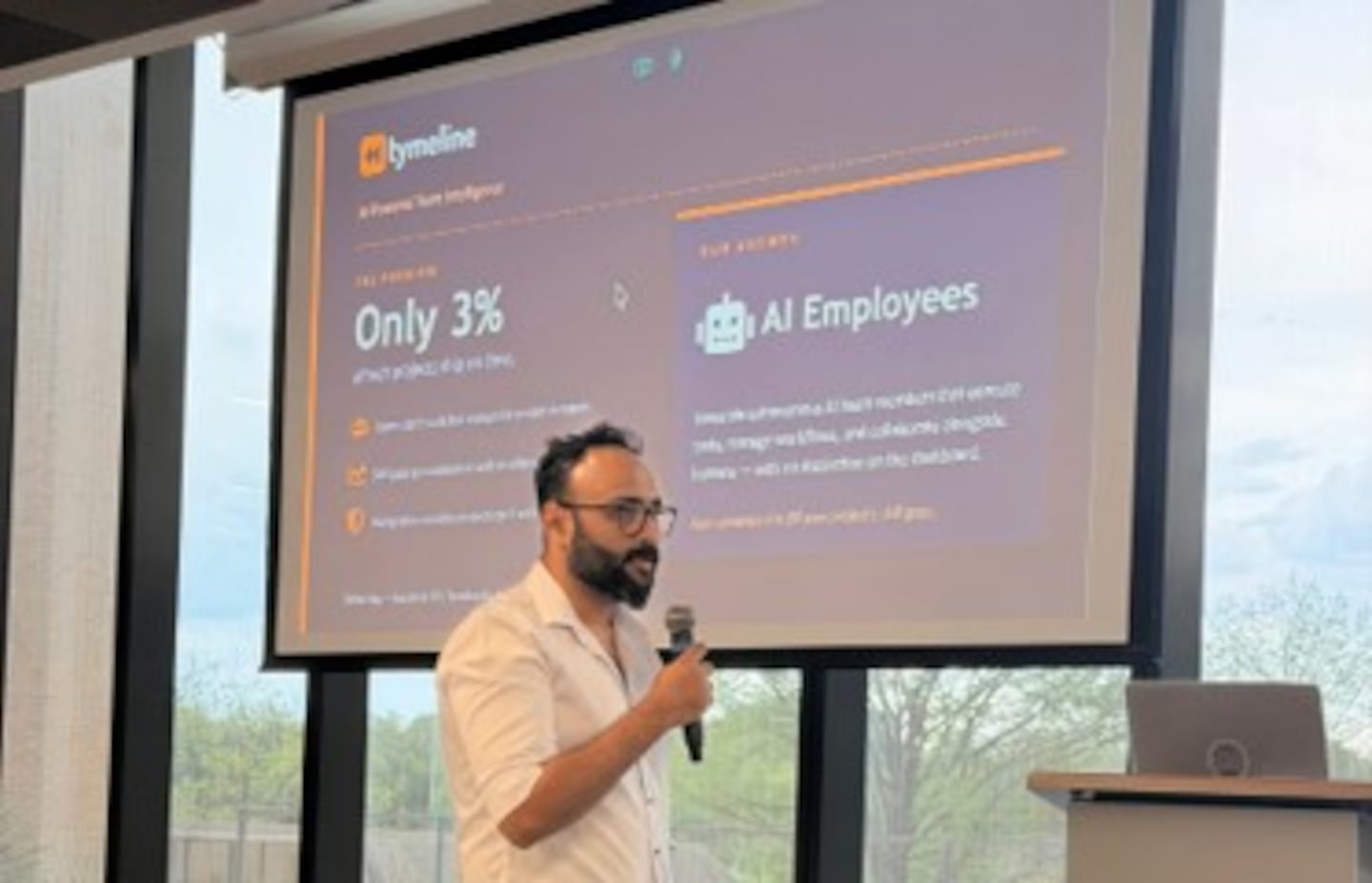
Design and verification tools have improved, Nag argues, but running the program still requires teams and suppliers to deliver work to one another against a fixed date. His proposed answer is to give software responsibility for that coordination, with a defined team, commitments and limits on what it may decide.
Nag’s argument is not a conclusion of the Siemens study. Harry Foster, the Siemens scientist who leads the research, cautioned against attributing the decline to a single cause.
Managing the work between engineering teams
Tymeline describes 10 specialized AI Employees assigned to functions including design, verification, packaging, firmware and program operations. Each is intended to retain the program’s history and track commitments against supporting evidence.
The software reads signals from engineering tools, tickets, timing reports, test data and supplier messages. According to the company, it can identify slipping commitments, prepare design-review materials and propose changes to downstream schedules. Engineers remain responsible for the chip design.
The work includes triaging failed automated tests, assembling evidence before a design review and contacting the owner of a delayed task. When a date moves, the agent is intended to identify recovery options and put a costed choice before the person authorized to make it.
In a company example, a supplier’s intellectual property block arrives four weeks late. An agent proposes running timing work in parallel, seeks engineering leadership’s approval and updates the plan. The example illustrates the intended workflow rather than independently measured performance.
The proposed system also retains lessons from the delay for future programs, including additional scheduling margin for that supplier. Nag describes semiconductor programs as an initial test of the approach, rather than its only application.
Nag’s focus is on coordination across tools and companies, rather than replacing the design work performed within individual engineering applications.
Today, much of that coordination falls to spreadsheets, weekly reviews and senior engineers pulled away from engineering to establish the status of the work. Nag argues that even well-run programs can be steered using information one or two weeks old because that is how often reviews happen.
Authority expands with human approval
How much the software can do without a person is the customer’s decision. Tymeline describes a progression from observing the program to diagnosing problems, recommending changes and acting within approved limits.
Nag compares the process to a new hire earning responsibility. A program manager in the first month is not automatically given authority over a manufacturing deadline. The person earns it by making smaller decisions correctly, repeatedly, in front of people able to judge the work.
An agent might be authorized to request evidence or follow up with a task owner before receiving permission to change a schedule. Each expansion of authority requires approval from a designated person.
Some decisions remain with humans. Tymeline says its agents cannot approve tape-out gates, sign off on customer qualification, authorize another manufacturing round or move people between teams. The company describes these restrictions as controls enforced when an action is attempted, rather than instructions the model is simply asked to follow.
A record of each consequential decision
Tymeline says each agent receives a named identity within the customer’s identity provider, limited credentials and a designated supervisor. Access can be reviewed or suspended while preserving the agent’s history.
Consequential actions generate what the company calls a decision receipt. It records the goal, information consulted, options considered, applicable policy and approver, together with a cryptographic hash intended to reveal subsequent changes.
Receipts are intended to flow into the security tools a customer already uses. The distinction from an ordinary log is that an auditor, customer or regulator should be able to examine the basis for a decision, rather than rely on the software’s account of itself.
The company says those records are anchored to a blockchain-backed ledger called Tymeline ID. Its public briefings do not fully explain how an outside party would independently verify them. That is an important question for buyers assessing the accountability claims.
Research and results remain distinct
According to his company biography, Nag has been building data-driven software since 2008 across healthcare, mobility, fashion and manufacturing. Tymeline’s earlier work focused on digital identity, including verifying a job candidate’s history at its source. The current product extends that interest in verifiable records to software acting within an organization.
The approach builds on Nag’s earlier work connecting AI-assisted decisions with records that can be checked. A 2024 paper co-authored under his full name, Shrikarnag Bangalore Prahallada, proposed using historical team performance to help set goals and securing that history on a blockchain.
A later conceptual paper described Autonomous Organizational Intelligence, combining a digital model of an organization, specialized agents and feedback from results. A related U.S. patent application was published Oct. 29, 2026. An application does not establish that the technology works or that a patent has been granted.
One configuration in the application separates routine decisions from strategic choices that require human review. The conceptual research also identifies trust and human control as open questions, making governance part of the proposed architecture rather than treating it as a separate operational concern.
The papers describe frameworks rather than field studies demonstrating improved chip delivery. Whether AI-managed coordination produces more reliable schedules remains a question for actual programs to answer.
A preserved record can also document a bad decision. Evidence that a record has not changed does not establish that its source information was accurate or current. For chip teams evaluating the approach, the test is whether the agents improve execution while keeping authority and responsibility clear.
©2026 Cox Media Group


