
What if the next generation of wearables could help you move?
AlpWalk S1 is an AI-powered hip exoskeleton designed to make walking, climbing stairs and tackling hills less physically demanding, according to its manufacturer.
The company markets the device to older adults who want to stay active but find that their legs do not always have the endurance to keep up with their plans.
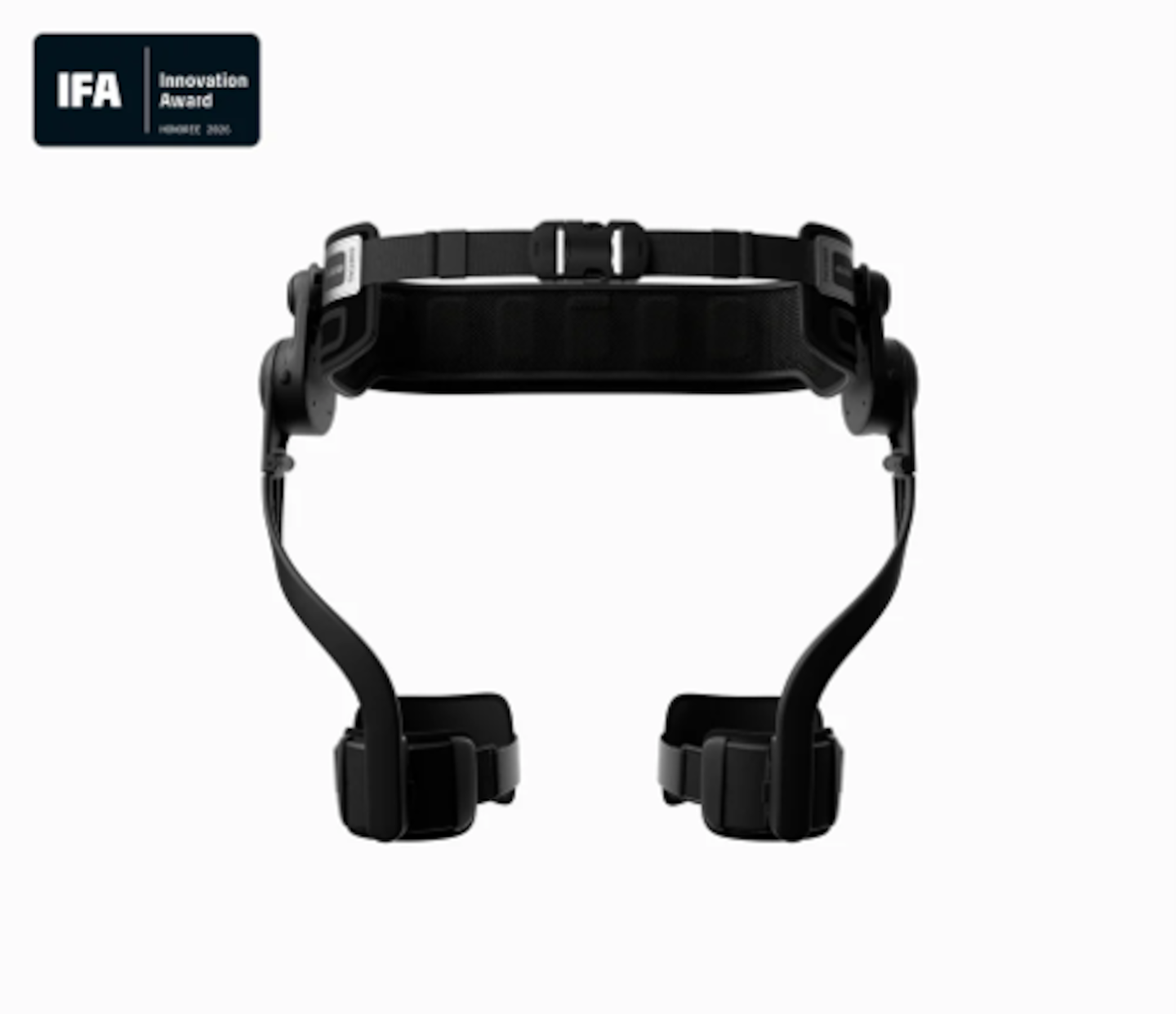
According to AlpWalk, the exoskeleton combines its own chip and microcontroller architecture with motion sensors and proprietary gait-recognition algorithms trained on more than 10,000 gait samples from older adults.
The company claims 99% gait-recognition accuracy, allowing the system to distinguish between walking, climbing stairs, tackling inclines and standing still. AlpWalk also says it learns individual walking patterns, adjusting its assistance to the user’s natural pace rather than forcing a predetermined stride.
When additional support is needed, the system can deliver up to 800 watts of peak power and 18 newton-meters of torque per motor, according to the company. AlpWalk says its internal laboratory testing found a 35% reduction in metabolic energy expenditure. That company-reported result does not establish the benefit an individual user will experience.
Practical considerations for a wearable robot
Power is one consideration, but comfort and portability also matter for a device worn around the hips.
AlpWalk lists the S1’s weight at 2.4 kilograms, or about 5.3 pounds. The company says its carbon-fiber composite frame folds to fit inside a 20-liter backpack, while adjustable leg supports, breathable nylon straps and waist cushioning are intended to support extended wear.
The company also lists 0.1-degree joint-angle control and mechanical safety stops intended to limit movement beyond the device’s designed range.
Battery life is another practical consideration. AlpWalk S1 uses a removable 4,600-milliamp-hour battery, with a company-claimed range of up to 30 kilometers, or about 19 miles, and four to six hours of operation. Actual runtime will depend on use.
The device also supports 65-watt USB-C charging. Its removable battery allows users with a charged spare to swap batteries between outings.
From tracking movement to assisting it
Instead of reminding people to stand up, AlpWalk S1 is designed to help users expend less energy taking those steps in the first place.
AlpWalk says its Black Friday promotion reduces the S1’s regular price from $1,299 to $1,099. An additional $100 discount code available on the brand’s website brings the advertised price to $999.
For older adults interested in traveling, sightseeing or spending time outdoors with family, that presents a different use for wearable technology. Its practical value will depend on fit, comfort, battery performance and how effectively the assistance works for the individual.
Click here to download our free news, weather and smart TV apps. And click here to stream Channel 9 Eyewitness News live.

©2026 Cox Media Group


