KENNEDY SPACE CENTER, Fla. — NASA is celebrating the successful launch of the Artemis II mission on Wednesday from Florida’s Space Coast.
SEE LIVE UPDATES ON ARTEMIS II BELOW:
6:38 p.m. update:
The spacecraft adapter jettison fairings that enclose the service module and the launch abort system have separated from the Orion spacecraft. With the rocket and spacecraft now flying above the densest layers of Earth’s atmosphere, Orion no longer requires the protective structures that shielded it during the early, high‑dynamic‑pressure portion of launch.
The next major milestone is core stage separation and Interim Cryogenic Propulsion Stage ignition.
6:37 p.m. update:
The SLS (Space Launch System) twin solid rocket boosters have separated. The boosters, each standing 177 feet tall and generating more than 3.6 million pounds of thrust at liftoff, provide most of the rocket’s power during the first two minutes of flight and separation reduces mass and allows the core stage to continue propelling the Orion spacecraft, named Integrity, toward orbit.
With the boosters now clear, the SLS core stage remains the primary source of thrust.
In about one minute, the spacecraft adapter jettison fairings that enclose Orion’s service module and the launch abort system will separate from the spacecraft.
6:35 p.m. update:
NASA’s Artemis II SLS (Space Launch System) rocket, carrying the Orion spacecraft with NASA astronauts Reid Wiseman, Victor Glover, Christina Koch, and CSA astronaut Jeremy Hansen, launched from Kennedy Space Center’s Launch Complex 39B in Florida at 6:35 p.m. EDT to start its journey into deep space.
5:05 p.m update:
The countdown to today’s Artemis II launch is ongoing, but the Eastern Range has detected a communication issue with the flight termination system that they are actively addressing.
The flight termination system acts as a safety feature allowing ground engineers to trigger a signal that destroys the rocket if it veers off course during ascent, protecting public safety. If there is no confidence in this system’s proper functioning when needed, current launches would be canceled.
According to NASA, engineers have created a way to verify the system’s functionality and have tested the solution, and the launch is still on .
4:36 p.m update:
WFTV has been informed that NASA has detected a technical issue that may cause issues with the launch of Artemis II.
Technicians are working of optaining a part to fix the issue before the scheduled launch.
4:18 p.m. update:
Technicians began installing the crew module hatch service panel on the Orion spacecraft, an important step in final launch preparations. This panel protects key connections and ensures the hatch area is secure for flight.
As part of current closeout activities, teams are confirming all systems around the hatch are properly sealed and ready for the mission.
With the hatch area secured, teams will continue final checks and countdown operations at Launch Pad 39B at NASA’s Kennedy Space Center in Florida, bringing us closer to sending astronauts on a historic journey around the Moon.
3:45 p.m. update:
NASA’s Artemis II closeout crew is currently finishing a vital pre-launch step: preparing and sealing the crew module hatch on the Orion spacecraft. Inside the White Room at Launch Complex 39B, they are carefully inspecting seals, tightening fasteners, and checking that the hatch is airtight.
This process ensures Orion is fully pressurized and ready for flight. Once the hatch is closed and locked, the astronauts are officially sealed inside their spacecraft, marking a major milestone on the path to liftoff.
2:45 p.m. update:
NASA’s Artemis II crew is boarding the Orion spacecraft to perform communication checks, ensuring voice links with mission control and onboard systems are working properly.
Before boarding the spacecraft for their roughly 10-day round trip around the Moon, all four crewmembers signed the inside of the White Room, an area at the end of the crew access arm that grants access to the spacecraft.
After completing communication checks, the team conducted suit leak tests—an essential safety step to verify that each pressure suit stays intact during cabin depressurization.
1:45 p.m. update:
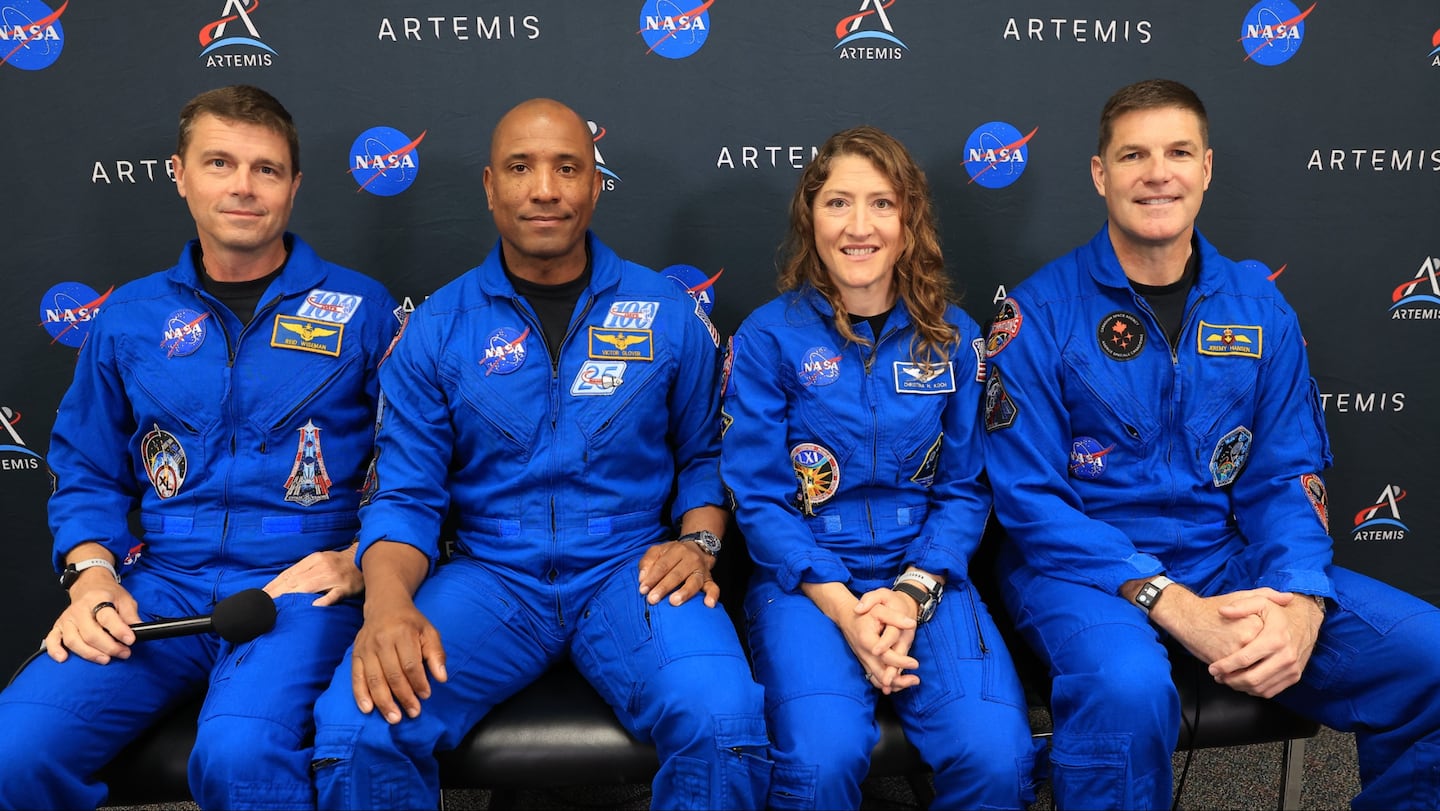
NASA astronauts Reid Wiseman (commander), Victor Glover (pilot), and Christina Koch (mission specialist), along with CSA astronaut Jeremy Hansen (mission specialist), are preparing inside the Astronaut Crew Quarters at the Neil A. Armstrong Operations and Checkout Building at Kennedy Space Center in Florida.
The design and engineering improvements in the suits offer extra protection for astronauts, helping ensure they return safely from deep space missions.
During suit-up, teams will inspect for leaks and verify that all life support systems, such as air and power, are functioning properly before the crew’s departure to NASA Kennedy’s Launch Complex 39B.
12:45 p.m. update:
A NASA test director has requested that the Artemis 2 launch team and astronauts refrain from a long-running tradition of pranks before the mission, which is scheduled for April Fools’ Day.
The directive aims to maintain strict focus on launch operations at the Kennedy Space Center.
Pre-launch pranks between flight crews and ground personnel have been a tradition at the facility since the 1960s Apollo program.
See more in the video:

12 p.m. update:
Canadian astronaut Jeremy Hansen shared a special message on his social media ahead of the Artemis II launch.
In the video, he says, “Canada, I’m thinking of you. And I’m hoping that all of you see your greatness reflected in this journey.”
One last message before the launch of Artemis II... pic.twitter.com/IpmYBKrhu7
— Jeremy R. Hansen (@Astro_Jeremy) April 1, 2026
Artemis II will be Hansen’s first spaceflight and the first time a Canadian astronaut travels beyond low-Earth orbit.
11:10 a.m. update:
As Artemis II gets ready to launch, thousands are showing up at the Space Coast to get in place and watch.
While the Space Coast Office of Tourism expects around 100,000 visitors, analyst John Boyd of the Boyd Company estimates around 400,000, including watch parties across Central Florida.
READ MORE: Space enthusiasts flock to Space Coast for Artemis II launch

10:20 a.m. update:
NASA crews have finished the “slow fill phase” of fueling the rocket.
Teams are now loading super-cold liquid hydrogen into the rocket’s main tanks.
9:52 am ET - Fast fill of liquid hydrogen (LH2) for the interim cryogenic propulsion stage is underway.
— NASA's Kennedy Space Center (@NASAKennedy) April 1, 2026
After completing the chilldown phase, this step rapidly loads super-cold LH2 into the upper stage tanks, ensuring the upper stage is fueled and ready to perform its…
This “fast fill” move brings the SLS rocket closer to full capacity.
NASA also reported the Artemis II astronauts are awake and the launch team is conducting status checks.
The fueling process for the Artemis II rocket has picked up speed. The rocket is now more quickly filling with liquid oxygen and liquid hydrogen.
— NASA Artemis (@NASAArtemis) April 1, 2026
When the core stage is completely full, it will contain 196,000 gallons of liquid oxygen and 537,000 gallons of liquid hydrogen. pic.twitter.com/wejiCveeNb
9:30 a.m. update:
The countdown clock for NASA’s Artemis II mission is officially ticking down at the Kennedy Space Center.
The four-person crew has started their final preparations ahead of Wednesday’s planned launch.
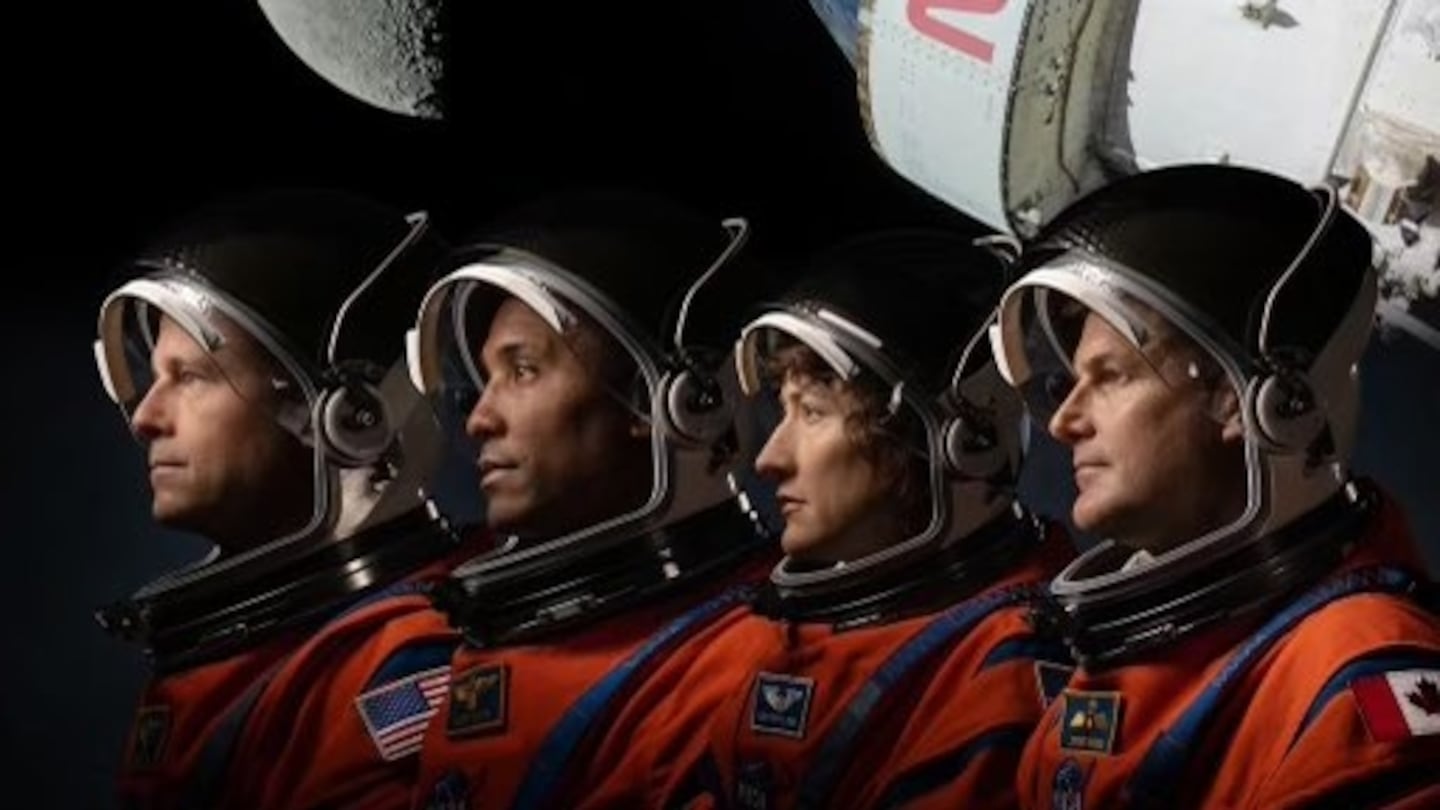
The Artemis 2 mission aims to send four astronauts around the moon, a test flight marking the return of humans to deep space.
Here are more details on the Artemis II crew:
Best of the best: Meet the Artemis II astronauts
8:40 a.m. update:
In addition to the live coverage on Channel 9, many around Central Florida will be able to see and hear the launch of Artemis II.
The rocket should be visible in the sky for nearly the entire state of Florida and parts of southeast Georgia, depending on weather conditions.
Just look in the direction of the Kennedy Space Center shortly after the launch time, and you may catch a glimpse of the rocket as it makes its way into space.
Can you see our Moon rocket lift off from your backyard?
— NASA (@NASA) March 31, 2026
Skywatchers in Florida and southern Georgia will have a shot. Check out this map to see when you should look up! Artemis II is targeted to launch no earlier than April 1. pic.twitter.com/3WsJlEVufK
The SLS rocket is one of the biggest and loudest rockets ever built.
The launch will be louder than most of the launches experienced from Florida’s Space Coast.
The sound of Artemis II will be clearly audible up to 10 to 20 miles away.
However, even people who are 30 to 40 miles away could still hear a noticeable rumble outdoors.
Some rocket experts have said a faint thunder-like sound may be heard up to 50 miles away, depending on weather conditions and other environmental factors.
7:50 a.m. update:
Crews have started “tanking operations” to load propellant into NASA’s (SLS) Space Launch System rocket.
This marks the first major step in preparing the rocket for launch Wednesday afternoon.
The launch team at @NASAKennedy are GO to begin filling the Artemis II rocket with fuel.
— NASA Artemis (@NASAArtemis) April 1, 2026
The official launch broadcast begins at 12:50pm ET (1650 UTC). Liftoff is scheduled for no earlier than 6:24 pm ET (2224 UTC). Tanking coverage can be found here: https://t.co/VVJqQrRz4a pic.twitter.com/tFoKsKxOvX
Original report:
NASA is preparing to send four astronauts on a 10-day mission around the moon as the launch window for Artemis II approaches.
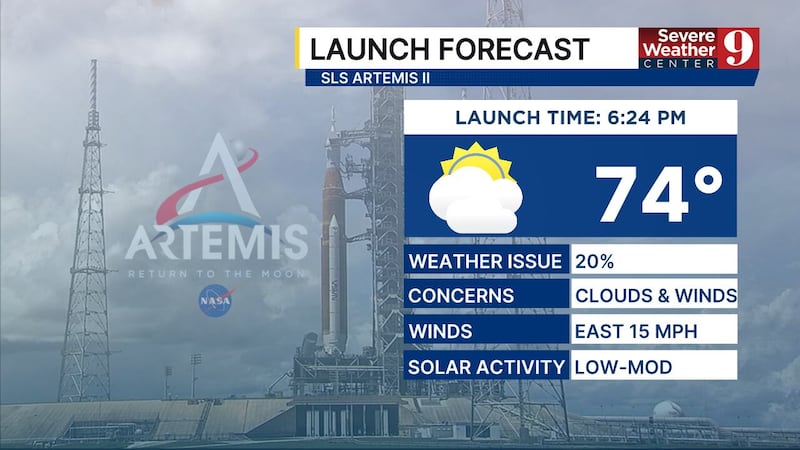
The mission has a two-hour launch window that opens on Wednesday at 6:24 p.m., from Launch Complex 39-B at the Kennedy Space Center.
The trajectory of the Artemis II mission will take the crew approximately 4,600 miles beyond the far side of the moon before they return to Earth.
The latest from Titusville as we prepare for the Artemis II launch! @WFTV pic.twitter.com/7g3hFBrLhk
— Sam Martello (@sammartellotv) April 1, 2026
Crowds are already starting to gather on Florida’s Space Coast as teams complete final preparations on the Space Launch System rocket and Orion spacecraft.
Operations include performing lockdowns to ensure that every system and engine is ready for the four astronauts to begin their journey.
Once these final steps are complete, all non-essential personnel will move away from the launch pad.
NASA Administrator Jared Isaacman spoke about the intensity of the preparation and the inherent dangers of lunar exploration.
Isaacman noted that the crew will travel at speeds exceeding those of any previous human spaceflight.
“We have to understand the risks that go into missions such as this,” Isaacman said. “We spend a lot of time preparing for them. We have pre-flight readiness reviews, flight readiness reviews. We do lots of testing. We do everything we can to bring risk as close to zero as we possibly can. But at some point, when you’re exploring the worlds beyond ours, there are some risks worth taking.”
Spectators have already begun claiming viewing spots across the Space Coast.
At Jetty Park in Cape Canaveral, visitors have parked RVs and campers to secure a front-row view of the liftoff.
Similar crowds have gathered at Spaceview Park in Titusville to witness the historic launch.
Action. Wonder. Adventure. Artemis II has got it all. Don't miss the moment. Our crewed Moon mission will launch as early as April 1.
— NASA (@NASA) March 30, 2026
Learn how to watch: https://t.co/fAg0bGAqEc pic.twitter.com/2uhg8EhwTv
Jerry Stencel is among the observers waiting for the launch.
Stencel, who previously watched the Apollo missions in person, compared the upcoming event to his past experiences at the launch site.
“I was right there at the launch site when they were launching it,” Stencel said. “The Apollo, the ground shook and it’s supposed to be amazing.”
The launch has also attracted younger viewers, including students from Indian Trails Middle School in Winter Springs.
Nathan, a student at the school, is attending the event to see the mission enter the history books.
“I’m most excited to like see the light and like feel the shaking of it,” Nathan said. “It’s fun to know that like that’s going to be going around the moon.”
Tomorrow, we launch.
— NASA Administrator Jared Isaacman (@NASAAdmin) April 1, 2026
At sunset tonight, Artemis II waits on the pad, ready to carry astronauts potentially farther than any humans have traveled in more than half a century.
The next era of exploration begins. pic.twitter.com/vdABkjRrnf
Channel 9 will have live team coverage of the Artemis II mission all day Wednesday and throughout the journey to the moon and back.
Click here to download our free news, weather and smart TV apps. And click here to stream Channel 9 Eyewitness News live.

©2026 Cox Media Group


